
The Quiet Pressure Of New Year’s Resolutions – An Apiary Perspective
December 30, 2025
0 min read


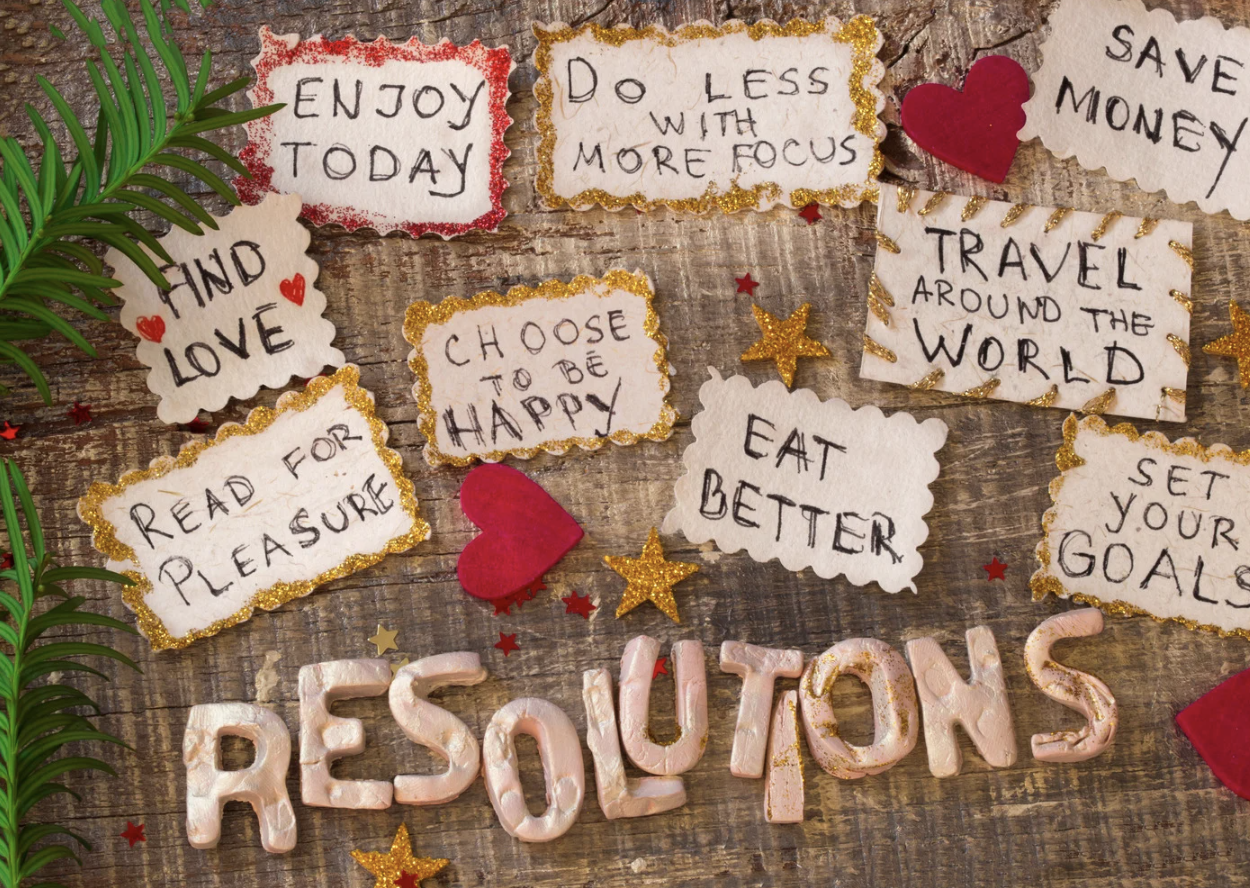
As we step into a new year, many of us feel a familiar, quiet pressure: this is the moment to become a “better version” of ourselves. Our feeds fill with “new year, new me,” gyms are busier, diet and productivity ads multiply. It can seem as if everyone has a theme for the year, a 12 week plan, or a colour coded life overhaul – and if you don’t, you’re already behind.
At Apiary, we see this pressure show up most intensely around the big life events you talk to us about: fertility journeys, caring for ageing parents, bereavement, relationship changes, financial stress, career shifts, health scares. The world tells you to optimise; life is already asking you to survive and adapt. No wonder it feels overwhelming.
Why Big Resolutions Often Collapse Under Real Life
Resolutions don’t usually fail because you’re weak; they fail because they’re not designed for the reality of your life.
If you’re navigating IVF, early parenthood, menopause, a new diagnosis, or high caregiving loads, promising that from 1 January you’ll overhaul your diet, exercise daily, never scroll at night and finally “get organised” is a lot. You’re not just setting goals – you’re asking yourself to wage war on your current coping strategies.
Your brain is wired to resist sudden, sweeping change. Habits (even imperfect ones) are energy saving shortcuts. When you try to replace several at once, especially on top of existing stress, your system gets overloaded. Motivation might carry you for a week or two, but as soon as work demands spike, sleep is disrupted, or a child is ill, the old patterns feel safer and easier – so you slide back. That doesn’t mean you’re not committed; it means you’re human.
All or nothing thinking makes this worse. You miss one workout, have one drink in Dry January, or skip a meditation – and it’s tempting to decide you’ve failed and scrap the whole thing. In the context of grief, anxiety, hormonal shifts or burnout, that self criticism lands even harder.
When Other People’s Goals Don’t Fit Your Life
We also hear how social comparison sneaks in. A friend is training for a marathon; a colleague is doing 5 a.m. starts; someone online is investing, journaling and learning a language before breakfast. If you’re simply trying to sleep through the night, get to a medical appointment on time, or keep your head above water in a crisis, your goals can feel “small” or “not enough.”
This is where resolutions drift away from what you genuinely need. Instead of asking, “What would support me given the life I’m actually living?” the question becomes “What sounds impressive?” You end up with goals designed for an imaginary, pressure free life – and they’re the first to go when reality intervenes.
From an Apiary lens, the most important question is: What would ease my stress and support my wellbeing in this specific season of life? Not in an ideal world, but in the world you wake up in tomorrow.
Start So Small It Feels Almost Silly
The habits that genuinely support you through big life events are often surprisingly small. Not because you lack ambition, but because your nervous system – especially when under stress – can only sustain so much new effort at once.
Consistency beats intensity. A tiny, realistic shift repeated regularly will help you far more than a heroic plan that collapses by February.
A few “small enough to stick” examples, tailored to real life stress:
• Instead of: “I’ll go to the gym five times a week.”
Try: “On workdays, I’ll move my body for 10 minutes – even if it’s just stretching while the kettle boils.”
• Instead of: “I’ll fix my sleep this year.”
Try: “Four nights a week, I’ll put my phone in another room 15 minutes before bed.”
• Instead of: “I’ll finally ‘sort my life out’ financially.”
Try: “Once a week, I’ll spend 10 minutes looking at one small money task – a bill, a subscription, or a savings pot.”
• Instead of: “I’ll be more present with my partner or kids.”
Try: “Each day, I’ll create one phone free 10 minute window just to connect.”
A good test: Could I still do this on a terrible day – after bad news, a poor night’s sleep, or a draining work call? If the answer is no, make it smaller until the answer is yes.
Build Gently, Don’t Reboot Harshly
Rather than treating New Year as a complete reboot, think of it as a gentle nudge. You’re not erasing last year’s version of you – including the you who coped with hospital visits, time zone changes, fertility medications, deadlines, or caring responsibilities. You’re tilting things one or two degrees towards kindness.
A gentler Apiary style approach might look like:
1. Choose one area that would really help your stress.
Sleep, boundaries at work, movement, emotional support, money, connection? Pick one. Everything else can wait.
2. Frame it as a 30 day experiment, not a lifelong promise.
“For the next month, I’ll try…” Experiments are flexible; you’re gathering data about what works in your current life, not proving your worth.
3. Expect disruption from the start.
Life events don’t respect calendars. Assume there’ll be hectic weeks, appointments, sick days, travel, or emotional dips. The simple rule: never miss twice. If you skip a day, just show up the next one, even if only for one minute.
4. Keep your wins visible.
Note your small actions somewhere you can see – a calendar tick, a note in your phone, a quick line in a journal. Under stress, your brain often ignores progress; you’re giving it proof that you are showing up for yourself.
Resolutions As Support, Not Self Punishment
From an Apiary perspective, the most helpful New Year intentions aren’t punishments for who you were last year. They’re small acts of support for the person you are right now, in the middle of whatever life event you’re navigating.
Your resolution doesn’t need to be dramatic to be meaningful. “I’ll ask for help once a week,” “I’ll book that screening,” “I’ll give myself permission to rest without guilt on Sundays” – these are just as valid, and often far more powerful, than any perfectionist overhaul.
So this year, instead of trying to transform everything at once, consider choosing one small, kind change that genuinely fits your current life. Make it so simple you almost roll your eyes at it. Then practice keeping that tiny promise to yourself, quietly, alongside the noise of everyone else’s goals.
Over the course of a year of fertility treatments, caregiving, career moves, health challenges, or healing, that one small habit can become a steady anchor – not because it changed you overnight, but because it reminded you that meaningful change is possible without breaking yourself to get there.
Why Big Resolutions Often Collapse Under Real Life
Resolutions don’t usually fail because you’re weak; they fail because they’re not designed for the reality of your life.
If you’re navigating IVF, early parenthood, menopause, a new diagnosis, or high caregiving loads, promising that from 1 January you’ll overhaul your diet, exercise daily, never scroll at night and finally “get organised” is a lot. You’re not just setting goals – you’re asking yourself to wage war on your current coping strategies.
Your brain is wired to resist sudden, sweeping change. Habits (even imperfect ones) are energy saving shortcuts. When you try to replace several at once, especially on top of existing stress, your system gets overloaded. Motivation might carry you for a week or two, but as soon as work demands spike, sleep is disrupted, or a child is ill, the old patterns feel safer and easier – so you slide back. That doesn’t mean you’re not committed; it means you’re human.
All or nothing thinking makes this worse. You miss one workout, have one drink in Dry January, or skip a meditation – and it’s tempting to decide you’ve failed and scrap the whole thing. In the context of grief, anxiety, hormonal shifts or burnout, that self criticism lands even harder.
When Other People’s Goals Don’t Fit Your Life
We also hear how social comparison sneaks in. A friend is training for a marathon; a colleague is doing 5 a.m. starts; someone online is investing, journaling and learning a language before breakfast. If you’re simply trying to sleep through the night, get to a medical appointment on time, or keep your head above water in a crisis, your goals can feel “small” or “not enough.”
This is where resolutions drift away from what you genuinely need. Instead of asking, “What would support me given the life I’m actually living?” the question becomes “What sounds impressive?” You end up with goals designed for an imaginary, pressure free life – and they’re the first to go when reality intervenes.
From an Apiary lens, the most important question is: What would ease my stress and support my wellbeing in this specific season of life? Not in an ideal world, but in the world you wake up in tomorrow.
Start So Small It Feels Almost Silly
The habits that genuinely support you through big life events are often surprisingly small. Not because you lack ambition, but because your nervous system – especially when under stress – can only sustain so much new effort at once.
Consistency beats intensity. A tiny, realistic shift repeated regularly will help you far more than a heroic plan that collapses by February.
A few “small enough to stick” examples, tailored to real life stress:
• Instead of: “I’ll go to the gym five times a week.”
Try: “On workdays, I’ll move my body for 10 minutes – even if it’s just stretching while the kettle boils.”
• Instead of: “I’ll fix my sleep this year.”
Try: “Four nights a week, I’ll put my phone in another room 15 minutes before bed.”
• Instead of: “I’ll finally ‘sort my life out’ financially.”
Try: “Once a week, I’ll spend 10 minutes looking at one small money task – a bill, a subscription, or a savings pot.”
• Instead of: “I’ll be more present with my partner or kids.”
Try: “Each day, I’ll create one phone free 10 minute window just to connect.”
A good test: Could I still do this on a terrible day – after bad news, a poor night’s sleep, or a draining work call? If the answer is no, make it smaller until the answer is yes.
Build Gently, Don’t Reboot Harshly
Rather than treating New Year as a complete reboot, think of it as a gentle nudge. You’re not erasing last year’s version of you – including the you who coped with hospital visits, time zone changes, fertility medications, deadlines, or caring responsibilities. You’re tilting things one or two degrees towards kindness.
A gentler Apiary style approach might look like:
1. Choose one area that would really help your stress.
Sleep, boundaries at work, movement, emotional support, money, connection? Pick one. Everything else can wait.
2. Frame it as a 30 day experiment, not a lifelong promise.
“For the next month, I’ll try…” Experiments are flexible; you’re gathering data about what works in your current life, not proving your worth.
3. Expect disruption from the start.
Life events don’t respect calendars. Assume there’ll be hectic weeks, appointments, sick days, travel, or emotional dips. The simple rule: never miss twice. If you skip a day, just show up the next one, even if only for one minute.
4. Keep your wins visible.
Note your small actions somewhere you can see – a calendar tick, a note in your phone, a quick line in a journal. Under stress, your brain often ignores progress; you’re giving it proof that you are showing up for yourself.
Resolutions As Support, Not Self Punishment
From an Apiary perspective, the most helpful New Year intentions aren’t punishments for who you were last year. They’re small acts of support for the person you are right now, in the middle of whatever life event you’re navigating.
Your resolution doesn’t need to be dramatic to be meaningful. “I’ll ask for help once a week,” “I’ll book that screening,” “I’ll give myself permission to rest without guilt on Sundays” – these are just as valid, and often far more powerful, than any perfectionist overhaul.
So this year, instead of trying to transform everything at once, consider choosing one small, kind change that genuinely fits your current life. Make it so simple you almost roll your eyes at it. Then practice keeping that tiny promise to yourself, quietly, alongside the noise of everyone else’s goals.
Over the course of a year of fertility treatments, caregiving, career moves, health challenges, or healing, that one small habit can become a steady anchor – not because it changed you overnight, but because it reminded you that meaningful change is possible without breaking yourself to get there.
You might also like
Stories, Press and News

0 min read
If you were no longer here to manage any of it, what would happen to your digital world?
read more
0 min read
Life at ApiaryLife is rarely predictable. One day might start calmly, diving into focused research; the next can be a fast‑paced mix of emails, shifting time zones and back‑to‑back Teams calls. No two days look the same, and that variety keeps us on our toes, adapting quickly and constantly learning. Here, I run though what a typical day looks like for me as an ApiaryLife Expert.
read more
0 min read
If day one of our Away Days was all big questions and strategy, day two was about exhaling a bit – and enjoying being in the same place for once.
read more